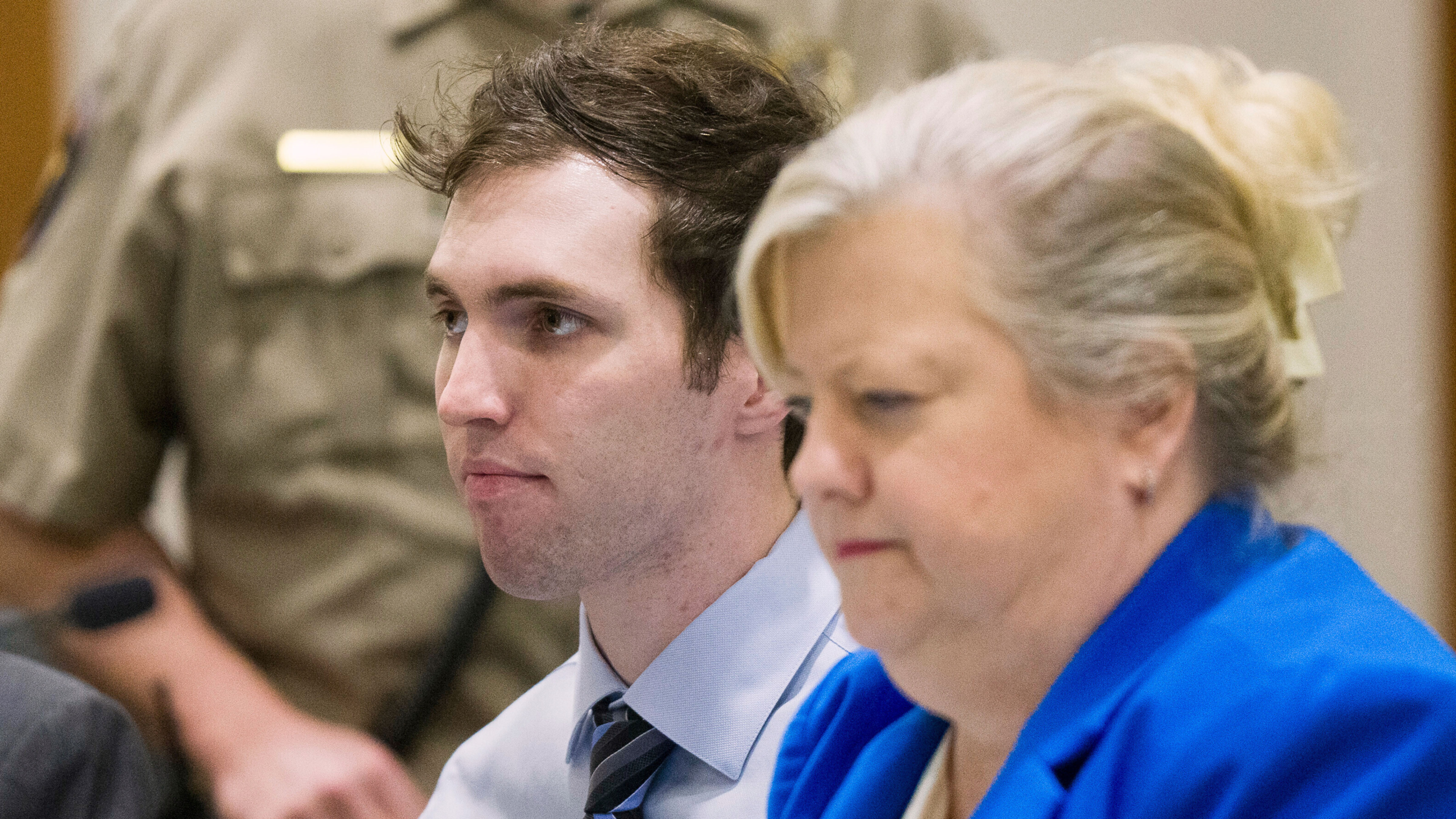
The preliminary hearing in the case involving tyler robinson has revealed new details about his alleged movements before and after the fatal shooting of Charlie Kirk.
According to testimony from a lead investigator, Robinson allegedly spent several hours at Utah Valley University before the shooting. He reportedly walked around campus, ate at Chick-fil-A, and approached members of Kirk’s Turning Point USA organization.
Investigators also presented surveillance footage that they say shows Robinson returning to campus before the attack. The footage allegedly shows him wearing different clothes and moving toward the Losee Building.
According to testimony, the suspect then reached the rooftop before the fatal shot.
After the shooting, investigators say the same man ran across the roof and left the university. Police later recovered a rifle in a wooded area near the campus.
Robinson’s defence team has challenged several parts of the prosecution’s evidence. His lawyers have questioned the surveillance footage, witness descriptions, DNA evidence, and other aspects of the investigation.
The preliminary hearing will not determine Robinson’s guilt or innocence. Instead, Judge Graf must decide whether prosecutors have presented enough evidence for the case to proceed to trial.
What Did Tyler Robinson Allegedly Do Before the Shooting?
According to investigator testimony, tyler robinson utah spent time at Utah Valley University several hours before the shooting.
David Hull, the lead investigator from Utah’s state Bureau of Investigation, presented surveillance footage during the hearing.
Hull testified that the footage allegedly shows Robinson on campus about four hours before the attack. The suspect reportedly wore a T-shirt and shorts while walking around the university.
Investigators say Robinson later visited Chick-fil-A and bought a meal.
The footage also allegedly shows Robinson approaching members of Kirk’s Turning Point USA organization. Hull confirmed the interaction but did not provide detailed information about what they discussed.
Robinson allegedly left campus after these activities.
About 90 minutes before the shooting, investigators say he returned to the university.
Hull testified that Robinson wore different clothes when he returned. The investigator also said the suspect appeared to walk with a limp.
These details form part of the prosecution’s timeline for the day of the shooting.
The defence has challenged several aspects of that timeline and the way investigators interpreted the surveillance footage.
Did Tyler Robinson Interact With Charlie Kirk’s Staff?
An investigator testified that tyler robinson 22 utah allegedly approached members of Charlie Kirk Turning Point USA organization before the shooting.
The interaction occurred while Robinson allegedly walked around the Utah Valley University campus.
David Hull confirmed that surveillance footage showed Robinson approaching members of the organization. However, he did not provide extensive details about the conversation or explain how long the interaction lasted.
This detail has attracted attention because the interaction allegedly occurred before the fatal shooting.
The prosecution has included the event within its broader timeline of Robinson’s movements.
However, the testimony does not establish what Robinson discussed with the staff members or what he intended at that time.
The court must consider the evidence presented during the preliminary hearing rather than assume a motive from the interaction alone.
Robinson’s defence team continues to challenge parts of the prosecution’s evidence.
The hearing therefore focuses on whether the available evidence provides enough grounds for a trial, rather than determining the meaning of every interaction investigators identified.
What Does the Surveillance Footage Show?
Surveillance footage forms an important part of the prosecution’s case.
Hull walked the court through footage that allegedly shows Robinson moving around Utah Valley University before the shooting.
The footage reportedly shows him walking around campus, buying food at Chick-fil-A, approaching members of Kirk’s organization, leaving the university, and returning later.
Investigators also say the footage shows Robinson moving toward the Losee Building.
According to Hull, the suspect rolled over a railing and reached the rooftop.
The rooftop has become a key part of the investigation because prosecutors believe the shooter used that location before the attack.
Another officer reportedly discovered an impression in gravel that investigators described as a possible “sniper pad.”
The impression appeared to indicate a position with a direct line of sight toward the area where Kirk spoke.
The defence has questioned this interpretation.
During cross-examination, attorney Kathy Nester pointed out that investigators found no shell casings on the rooftop near the suspected shooting position.
What Happened on the Rooftop?
According to Hull’s testimony, surveillance footage allegedly shows the suspect reaching the rooftop of the Losee Building before the shooting.
The suspect reportedly moved over a railing to access the roof.
Shortly after the fatal shot, the same man allegedly appeared on the rooftop again.
Hull testified that the footage showed him running across the roof before dropping down and leaving the university.
The investigator said the man appeared to carry an unidentified object while leaving the area.
Police later recovered a rifle in a wooded location near the area where investigators believe the suspect entered the woods.
Prosecutors have used these details to support their timeline of the attack.
The defence has challenged some of the physical evidence connected to the rooftop.
Nester highlighted the absence of shell casings near the suspected shooting position.
She also told the court that some witnesses described a different suspect on the rooftop.
These arguments allow the defence to question whether investigators have correctly identified the person shown in the footage.
Did Tyler Robinson Return to the Campus After the Shooting?
Investigators also testified about an alleged return to the university after the attack.
Hull told the court that tyler robinson charlie kirk allegedly returned near the campus during the early hours of 11 September.
At the time, police were searching for the suspected shooter.
According to Hull, Robinson attempted to drive a grey Dodge Challenger onto campus.
A police officer briefly spoke with him, and Robinson then drove away.
The officer recorded the vehicle’s licence plate.
Investigators consider this encounter part of the larger timeline surrounding the shooting.
The prosecution may use the encounter to connect Robinson with the vehicle shown in other surveillance footage.
However, the defence can challenge the circumstances of the encounter and the evidence linking Robinson to the vehicle.
The preliminary hearing does not establish whether Robinson committed the shooting.
Instead, the judge must determine whether prosecutors have presented sufficient evidence to allow the case to continue.
What Evidence Links Tyler Robinson to the Case?
Prosecutors have presented several categories of evidence during the preliminary hearing.
These include surveillance footage, physical evidence, DNA testing, witness accounts, and testimony from investigators.
Jennifer Faumuina, a sergeant with the state Bureau of Investigation, testified about DNA recovered from a screwdriver, rifle, and towel.
Prosecutors later introduced an FBI report concerning the DNA analysis.
According to prosecutors, the report found DNA matching tyler robinson. Investigators also identified a DNA match involving his roommate and romantic partner, Lance Twiggs.
Twiggs has cooperated with police.
The defence has challenged the DNA evidence and the testing process.
Robinson’s lawyers called FBI forensic analyst Amanda Bakker as their first witness. Bakker signed the DNA report and answered questions about laboratory procedures.
Nester questioned Bakker about testing protocols and the possibility of interpretation or testing errors.
The defence’s questions focus on how investigators collected, processed, and interpreted the samples.
The court will consider those arguments as it evaluates whether the prosecution has enough evidence to continue the case.
What Does the Defence Say About the Evidence?
Robinson’s defence team has challenged several important parts of the prosecution’s case.
Attorney Kathy Nester has questioned surveillance footage, witness descriptions, physical evidence, and forensic testing.
During questioning, Hull acknowledged that investigators found at least one other weapon on campus on the day of the shooting.
Nester also highlighted the absence of shell casings on the rooftop near the suspected shooting position.
The defence has raised questions about witness descriptions as well.
According to testimony, some witnesses described a different person on the rooftop.
Other people interviewed by police allegedly said a bald man drove the vehicle that prosecutors associate with Robinson.
The defence has also challenged the surveillance footage.
Robinson’s lawyers argued that investigators had edited some footage. They also pointed out that people who originally recorded certain footage did not appear in court for questioning.
These arguments form a significant part of the defence strategy during the preliminary hearing.
The lawyers are seeking to challenge the reliability and interpretation of evidence rather than simply accept the prosecution’s account.
What DNA Evidence Did Prosecutors Present?
DNA evidence has become another important part of the hearing.
Investigators examined DNA samples from several items recovered after the shooting.
These items included a screwdriver, rifle, and towel.
Jennifer Faumuina explained how investigators processed the samples during her testimony.
Prosecutors then introduced an FBI report that detailed the DNA findings.
According to prosecutors, the report identified DNA matching tyler robinson. The report also included a match involving Lance Twiggs.
Twiggs has cooperated with investigators.
The defence has questioned how investigators handled and tested the DNA evidence.
Bakker, the FBI forensic analyst who signed the report, testified for the defence.
Nester questioned Bakker about laboratory protocols and possible errors during testing.
This line of questioning allows the defence to examine whether investigators followed appropriate procedures.
The court must consider both the prosecution’s DNA evidence and the defence’s challenges before deciding whether the case should proceed.
Why Is the Preliminary Hearing Important?
The preliminary hearing has a different purpose from a criminal trial.
Judge Graf will not decide whether tyler robinson is guilty or innocent during this hearing.
Instead, the judge will determine whether prosecutors have presented enough evidence to allow the case to proceed to trial.
The prosecution faces a lower evidentiary threshold at this stage.
Prosecutors need to demonstrate reasonable grounds for putting Robinson before a jury.
A typical US criminal trial requires prosecutors to prove guilt beyond a reasonable doubt.
That standard differs from the threshold used during the preliminary hearing.
This distinction matters when evaluating the evidence presented against Robinson.
The court has heard testimony from investigators and forensic experts. The defence has questioned witnesses and challenged evidence.
Judge Graf must consider whether the prosecution has met the required threshold.
The hearing can therefore reveal important information without providing a final determination of guilt.
What Happened to Charlie Kirk?
Charlie Kirk was fatally shot during a university event at Utah Valley University on 10 September 2025.
Kirk was addressing an audience when someone shot him.
The incident triggered a major investigation and a search for the suspected shooter.
Investigators later identified tyler robinson as the person accused of carrying out the attack.
The case has now reached the preliminary hearing stage.
The court has heard testimony about surveillance footage, DNA evidence, physical items, witness accounts, and police activity.
Prosecutors continue to present evidence supporting their account of Robinson’s alleged movements.
The defence continues to challenge that evidence and raise questions about the investigation.
The case remains unresolved.
The preliminary hearing does not establish guilt or innocence. It only determines whether prosecutors have presented enough evidence for the case to move forward.
What Happens After the Hearing?
The preliminary hearing is scheduled to continue until Friday.
After hearing the evidence, Judge Graf will consider whether prosecutors have presented sufficient grounds for the case to proceed to trial.
The judge will not make a final determination of guilt or innocence during the preliminary hearing.
If the case moves forward, prosecutors and defence lawyers will prepare for a potential criminal trial.
At trial, prosecutors would need to prove guilt beyond a reasonable doubt.
The defence would have additional opportunities to challenge evidence, question witnesses, and present its own arguments.
Additional evidence could also emerge during later stages of the case.
The current hearing therefore represents one stage in a longer legal process.
Further testimony could provide more information about the surveillance footage, forensic evidence, witness accounts, and alleged movements involving tyler robinson.
Frequently Asked Questions
Who is Tyler Robinson?
Tyler Robinson, 23, is the man accused of fatally shooting Charlie Kirk at Utah Valley University on 10 September 2025. He has not entered a plea.
Did Tyler Robinson eat at Chick-fil-A before the shooting?
According to investigator testimony, Robinson allegedly visited Chick-fil-A on the Utah Valley University campus and bought a meal several hours before the shooting.
Did Tyler Robinson meet Charlie Kirk’s staff?
An investigator testified that Robinson allegedly approached members of Kirk’s Turning Point USA organization before the shooting. The testimony did not provide detailed information about their conversation.
What did Tyler Robinson allegedly do before the shooting?
Investigators say Robinson walked around campus, ate at Chick-fil-A, approached members of Kirk’s organization, left the university, and later returned.
What does the surveillance footage show?
Investigators say the footage shows Robinson on campus before the shooting, returning later, reaching the Losee Building rooftop, and leaving the area after the fatal shot.
What evidence have prosecutors presented?
Prosecutors have presented surveillance footage, DNA evidence, physical evidence, witness accounts, and testimony from investigators and forensic experts.
What evidence has the defence challenged?
The defence has questioned surveillance footage, witness descriptions, DNA testing, the absence of shell casings, and other aspects of the investigation.
Has Tyler Robinson been found guilty?
No. The preliminary hearing does not determine guilt or innocence. Judge Graf must decide whether prosecutors have enough evidence for the case to proceed to trial.
Conclusion
The latest hearing has revealed new details about tyler robinson and his alleged movements before and after the Charlie Kirk shooting.
According to investigators, Robinson allegedly spent time at Utah Valley University before the attack. He reportedly walked around campus, ate at Chick-fil-A, and approached members of Kirk’s organization.
Investigators also say surveillance footage shows him returning to campus in different clothing and moving toward the Losee Building rooftop.
After the fatal shot, the suspect allegedly ran across the roof and left the university. Police later recovered a rifle in a wooded area.
Prosecutors have also presented DNA evidence and other physical evidence. The defence has challenged several parts of that evidence, including surveillance footage, witness descriptions, DNA testing, and the absence of shell casings near the suspected rooftop position.
Judge Graf will not determine Robinson’s guilt during the preliminary hearing. Instead, the judge will decide whether prosecutors have presented enough evidence for the case to proceed to trial.